

Choosing office furniture for your business might seem straightforward, but there’s a lot to think about. You want a space that not only looks good but also works well for your team. Getting it right means your employees feel comfortable and can get on with their jobs efficiently.
At Office Fitout Professionals (OFP), we’ve been helping Perth businesses transform their workspaces for years, supplying everything from ergonomic office chairs to full boardroom fitouts. Below, we’ll walk you through the key things to keep in mind when selecting new furniture, so you end up with a practical and pleasant workspace that suits your team and your brand.
Key Takeaways
- Prioritise comfort and support by selecting ergonomic chairs and desks that adjust to individual needs
- Invest in durable, quality furniture made from sturdy materials so it lasts through daily commercial use
- Consider customisation options to tailor pieces to your specific space and brand
- Always keep your budget in mind and measure your available space carefully before buying
- Think about how the furniture will function for your team’s daily tasks and overall wellbeing
-
Ergonomic Chairs
When you’re setting up an office, one of the first things to think about is seating. And not just any seating, we’re talking about ergonomic chairs. These aren’t just fancy chairs; they’re designed to support the body properly, especially during long stretches at the desk. Your team spends a good chunk of their day in these chairs, so making sure they’re comfortable and well supported is a big deal for both their health and their output.
So what makes a chair “ergonomic”? A few things. Look for chairs that offer good lumbar support, the bit that supports the natural curve of the lower back, which can make a world of difference in preventing aches and pains. Adjustable features are also key. Being able to change the seat height to line up with the desk, plus adjustable armrests and backrests, means people can tailor the chair to their own body. This isn’t a one-size-fits-all situation.
Materials matter too. Many modern ergonomic chairs use breathable fabrics or mesh, which is great for air circulation, especially during Perth’s warmer months or in a busy office.
Some chairs are designed with managers or executives in mind, often featuring higher backrests that support the neck as well as the back. These can be really helpful during long meetings. The padding and support in these chairs are usually top-notch, using quality foam to keep things comfortable.
When you’re setting up an office, one of the first things to think about is seating. And not just any seating, we’re talking about ergonomic chairs. These aren’t just fancy chairs; they’re designed to support the body properly, especially during long stretches at the desk. Your team spends a good chunk of their day in these chairs, so making sure they’re comfortable and well supported is a big deal for both their health and their output.
So what makes a chair “ergonomic”? A few things. Look for chairs that offer good lumbar support, the bit that supports the natural curve of the lower back, which can make a world of difference in preventing aches and pains. Adjustable features are also key. Being able to change the seat height to line up with the desk, plus adjustable armrests and backrests, means people can tailor the chair to their own body. This isn’t a one-size-fits-all situation.
Materials matter too. Many modern ergonomic chairs use breathable fabrics or mesh, which is great for air circulation, especially during Perth’s warmer months or in a busy office.
Some chairs are designed with managers or executives in mind, often featuring higher backrests that support the neck as well as the back. These can be really helpful during long meetings. The padding and support in these chairs are usually top-notch, using quality foam to keep things comfortable.
Features to keep an eye out for:
- Adjustable height so users can set the chair correctly relative to their desk
- Lumbar support designed for the natural curve of the lower back
- Adjustable armrests that move up, down, in, or out to support the arms and reduce shoulder strain
- Breathable materials like mesh or fabric that allow air circulation
- Swivel and tilt mechanism for easy movement and the ability to recline slightly
Choosing the right ergonomic chairs is an investment in your team’s wellbeing and productivity. At OFP, our office chair range covers everything from mobile task chairs and meeting chairs through to executive seating, all curated with the modern worker in mind.
-
Standing Desks
Standing desks are definitely worth a look when you’re outfitting your office. They’ve become popular for good reason. They let your team switch between sitting and standing throughout the workday. Sitting for hours puts strain on the back and neck, and over time that can lead to nagging pain. A standing desk eases that pressure and gives people the option to move more without leaving their workspace.
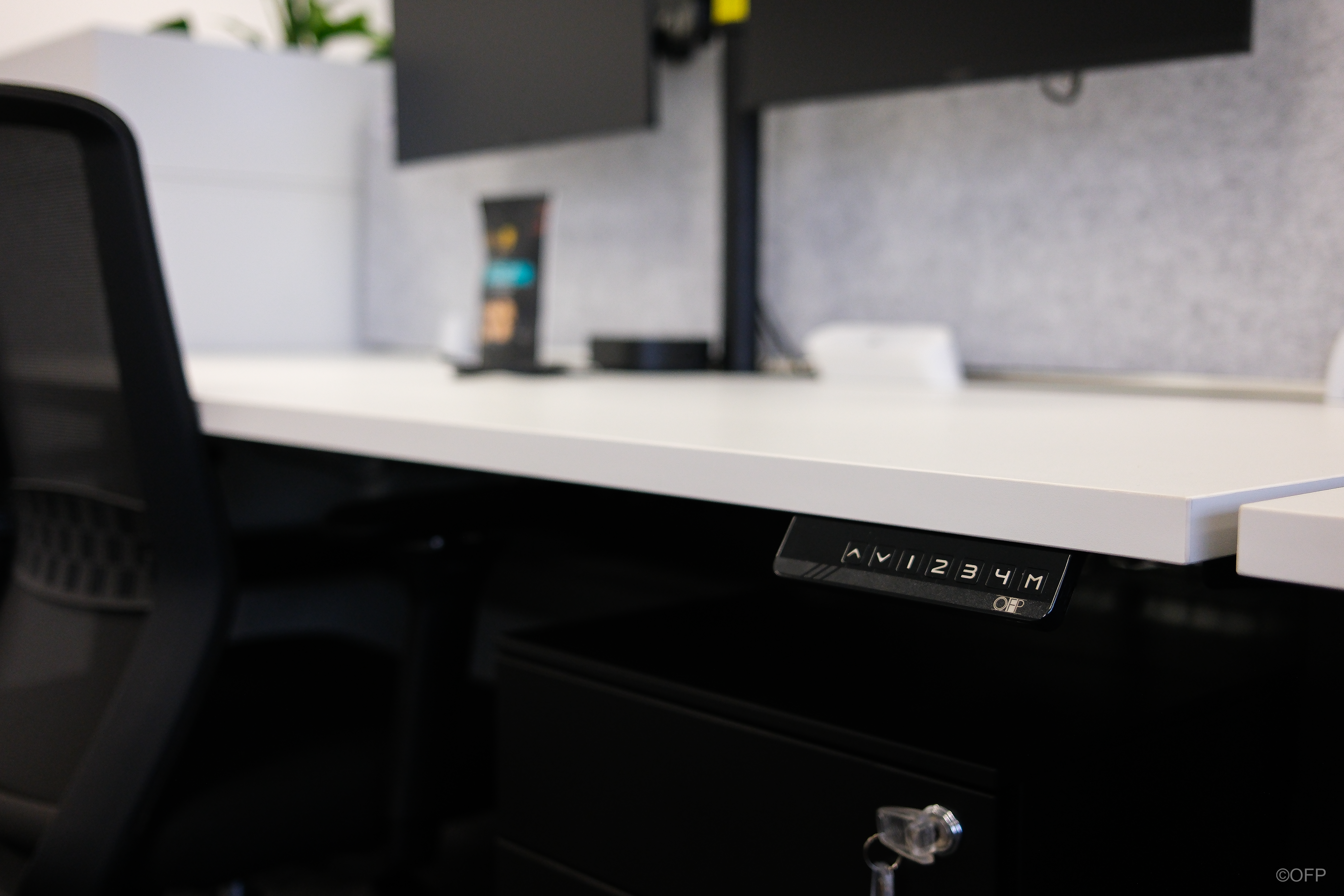
Beyond comfort, there are some other benefits worth considering. Changing posture like this can boost blood flow and reduce fatigue. When people feel less tired, they tend to focus better and get more done. Some research even points to standing more during the day potentially lowering the risk of issues like heart disease and diabetes.
You’ll find a few different types when shopping around:
- Manual height adjustable desks usually have a crank or lever to change the height. They’re often the more budget-friendly option.
- Electric height adjustable desks feature a dual motor system that you can control with a digital control panel. This gives you smooth, stable height adjustments at the touch of a button – super convenient for quick changes throughout the day. The dual motor setup ensures even lifting across the entire desktop, so you can easily transition between sitting and standing without any wobble or instability.
- Fixed height standing desks, while not adjustable, are set at a standing height and are often paired with a high stool for occasional sitting.
Some of the fancier “smart desks” can even remember preferred heights or sync with apps to remind you to switch positions. Think about how much space you have and which features will actually be useful for your team. Making sure the desk can handle the weight of monitors and other equipment is important too. Our open plan desk systems include height-adjustable options with integrated cable management, so the practical side is sorted from day one.
-
Computer Desks
When you’re setting up an office, the desk is probably the first thing that comes to mind. It’s where most of the actual work happens, so picking the right computer desk really matters. You don’t want something that makes people uncomfortable or simply doesn’t fit the space.
Think about size first. You need enough room for the computer, of course, but also for papers, a notepad, maybe a coffee mug. Don’t get a desk that’s too small and feels cramped, but also avoid one so massive it takes over the room. It needs to be proportionate to your workspace.
Then there’s style. Are you after something simple and functional, or do you need more surface area? L-shaped desks, for example, give you a lot more room to spread out, which is handy if your team juggles multiple tasks or has a lot of equipment. Some desks are designed with collaboration in mind, with shapes that make it easy for people to gather around and work together. The best computer desks balance space, comfort, and suitability for the work you actually do.
Material matters too. Desks can be made from wood or metal. Wood often gives a warmer, more traditional feel, while metal looks more modern and industrial. Consider what will look good with the rest of your office decor and what’s easy to keep clean.
-
Filing Cabinets
When you’re dealing with a lot of paperwork, keeping things organised is a big deal. Filing cabinets are your best bet for storing important documents safely and being able to find them when you need them.
Think about the size you need first. Do you have a small office or a larger corporate space? Pick a cabinet that fits your storage needs and doesn’t take up too much room.
Material matters too. You’ll want something durable, like metal or solid wood, and it should ideally match the rest of your office furniture.
For really sensitive files, make sure the cabinet has a good locking mechanism to keep confidential information secure. It’s a simple feature, but it makes a world of difference for peace of mind.
-
Bookcases
When you’re trying to keep your office tidy and organised, bookcases are a real lifesaver. They’re not just for storing books, either. Use them for displaying company awards, keeping reference materials handy, or even showcasing decorative items to make the place feel a bit more welcoming.
A few things to think about when picking out bookcases:
- Size and space. How much do you actually need to store? Measure the space where you plan to put the bookcase. You don’t want something that’s too big and makes the room feel cramped, or too small and doesn’t hold enough. Wall-mounted options are great for saving floor space in smaller offices.
- Material and style. Bookcases come in all sorts of materials like wood or metal. Wood gives a warmer, more traditional feel, while metal might suit a more modern, industrial look. Make sure the style fits with the rest of your office furniture.
- Adjustability. Some bookcases have shelves that move around. This is super handy if you need to store things of different heights, like big binders one day and smaller files the next.
A well-chosen bookcase can really help keep your workspace clutter-free and looking professional.
-
Conference Tables
The conference table is often the centrepiece of your meeting room, where important decisions are made and ideas are shared. Choosing the right one really matters for how productive and comfortable those sessions will be.
Think about a few things when you’re shopping. First, size. You need it to fit comfortably in the room without making it feel cramped, but also large enough so everyone can spread out their notes and laptops. A good rule of thumb is allowing at least 600 to 900mm of space per person. Then there’s shape. Rectangular tables are classic and work well for larger groups, but oval or boat-shaped tables can feel more intimate and encourage better conversation flow. Round tables are great for smaller teams where everyone needs to feel equally involved.
Material makes a difference too. Solid wood looks great and is very durable, but can be pricey. Laminate is more budget-friendly and still holds up well to daily use. Glass tables can make a space feel more open, but consider how easy they’ll be to keep clean.
Don’t forget about technology integration. These days, it’s handy to have tables with built-in power outlets, USB ports, and cable management. Fewer tangled cords and easier setup for presentations or video calls. Our boardroom furniture range includes slimline conference tables with features like adjustable feet, designed to combine craftsmanship with modern functionality.
A quick checklist for selecting your conference table:
- Size: ensure it fits the room and accommodates your team comfortably
- Shape: choose one that promotes interaction and suits your aesthetic
- Material: balance durability, budget, and style
- Technology: look for integrated power and data ports
-
Office Sofas
Sofas might not be the first thing that comes to mind when furnishing an office, but they can really change the feel of a space. They’re not just for the reception area anymore. Think about adding them to break rooms, collaborative zones, or even quiet corners. A comfy sofa can be a great spot for a quick chat with a colleague, a relaxed brainstorming session, or just a moment to recharge during a busy day.
Choosing the right sofa is about balancing comfort, style, and practicality.
A few things to keep in mind:
- Durability. Office furniture gets a lot of use, so look for sturdy frames and hard-wearing upholstery. Fabrics that are easy to clean are a big plus, especially in high-traffic areas.
- Comfort. While you want them to look good, they need to be comfortable too. Think about cushioning and overall design.
- Size and scale. Make sure the sofa fits the space. A massive sofa overwhelms a small room, while a tiny one looks lost in a larger area.
- Style. Does it fit with the rest of your office decor? You might want something sleek and modern, or something more traditional. It’s a chance to add a bit of personality.
Sofas can help create a more relaxed and inviting atmosphere, encouraging informal interactions and making your workspace feel less corporate.
-
Cupboards
When it comes to keeping your office tidy and organised, cupboards are absolute lifesavers. They’re not just for files; think office supplies, stationery, even spare equipment. Anything that needs to be out of sight but easily accessible. The right cupboard makes a surprising difference to how smoothly your workday flows.
Start with size. You don’t want a cupboard hogging all the floor space, but you need it to hold everything you intend to put in it. Measure the spot and make a list of what you need to store. That gives you a good idea of the dimensions and internal layout you’ll need.
Material is another big one. Most office cupboards are made from either wood or metal. Metal ones are generally tough and handle a lot of wear and tear, which suits busy environments. Wooden cupboards look a bit more polished and might fit a certain office aesthetic. Whatever you choose, make sure it feels sturdy and well-built.
Think about the inside too. Adjustable shelves are super handy because you can customise the space to fit different-sized items, from reams of paper to binders. Some cupboards come with drawers, perfect for smaller bits and pieces.
A quick rundown of things to consider:
- Storage needs: what exactly are you planning to store?
- Space availability: measure the area and allow for door swing
- Durability: metal is often the best bet for high-traffic areas
- Aesthetics: does it match the rest of your office furniture?
- Security: do you need to lock away sensitive items?
-
Lounge Chairs
When you’re thinking about the overall feel of your office, don’t forget about lounge chairs. These aren’t just for waiting rooms, though they’re great there too. Lounge chairs can really change the vibe of a breakout area or a quiet corner where someone might want a quick break or a more relaxed chat.
Think about what you want these chairs to do. Are they for informal meetings where people feel more at ease than around a formal table? Or are they purely for relaxation during breaks? The style depends on this. You might go for something plush and inviting, or something a bit more modern and sleek.
A few things to look for:
- Comfort is key. Since these are for relaxing or informal chats, they need to be comfortable. Look for good cushioning and supportive shapes.
- Style matters. These chairs can add a lot of personality to a space. Consider how they’ll fit with the rest of your office decor.
- Durability. Even though they’re for lounging, they’ll still get a lot of use. Make sure the fabric and frame are built to last.
- Size and shape. Think about the space you have. Some lounge chairs are quite bulky, while others are more compact. Modular options can be rearranged as your needs change.
Choosing the right lounge chair shows you care about creating a comfortable, welcoming environment, not just a place to get work done.
-
Benches
Benches can be a really useful addition to an office, especially in open-plan areas. They’re great for encouraging collaboration and can help you fit more people into a space without it feeling cramped. Think about putting them in a breakout area, a communal workspace, or even a wider corridor.
A few things to consider:
- Privacy. Some benches come with built-in dividers or screens. These offer a bit of personal space and help cut down on distractions.
- Storage. Benches with built-in storage like little lockers or shelves underneath give your staff a place to stash bags, coats, or personal items, keeping the area tidy.
- Comfort and durability. Just because it’s a bench doesn’t mean it should be uncomfortable. Look for decent padding and upholstery that’s tough enough for daily use and easy to wipe down.
Benches can be a smart way to add flexible seating that promotes interaction and makes the most of your office space.
-
Cubicles
Cubicles are worth considering when you’re thinking about how to set up your office. They’re not just about dividing up space; they really help your team focus. If you’ve got staff who need to concentrate without a lot of chatter or visual distractions, cubicles are a solid choice. They give people their own zone, a place they can make their own.
Think about how your team works. Sometimes you might want to create little groups or pods of cubicles that face each other. That way, people can easily chat and collaborate with their immediate colleagues but are still shielded from the general office buzz. It’s a good way to get a bit of both, teamwork and personal space.
When picking out cubicles, keep these in mind:
- Layout. How many people do you need to fit in? How much floor space do you actually have? How much privacy do your staff need? The design should make it easy for people to get around.
- Height. Taller walls mean more quiet and fewer distractions, but they can block natural light and make the air feel stuffy. Lower walls are better for collaboration and let more light in, but offer less privacy. Figure out what works best for your team’s workflow.
- Storage. Look for cubicles with built-in shelves or drawers. Less clutter usually means a clearer head for work.
If you’re not sure which approach will suit, OFP’s interior designers can help you weigh up the trade-offs based on how your team actually works.
-
Reception Desks
The reception desk is often the very first piece of furniture a visitor sees when they walk into your business. It’s more than just a place for someone to sit; it’s a statement about your brand and your company culture. Think of it as your business’s handshake. A well-chosen reception desk creates a sense of professionalism and efficiency, setting a positive tone right from the start.
Consider a few key things when looking. How will it fit with the overall aesthetic of your reception area? You want it to complement your decor, not clash with it. Some modern desks come with built-in features like company logos or subtle LED lighting, which can add a nice touch and reinforce your brand. The practicalities matter too. Does it offer enough surface area for a computer, phone, and paperwork? Is there adequate storage to keep the area tidy?
Beyond looks and basic function, think about materials. Many businesses are now opting for furniture made from sustainable or recycled materials, which is a great way to show your commitment to environmental responsibility. If your reception area needs to be flexible, modular desk systems can be reconfigured as your needs change.
Points to ponder:
- Size and scale: ensure the desk is proportionate to the reception area
- Storage solutions: look for built-in drawers, shelving, or cabinets
- Durability: reception desks see a lot of daily use, so choose sturdy materials
- Branding opportunities: consider desks that allow for logo or colour customisation
- Accessibility: is there enough legroom? Is the counter height comfortable for most people?
-
Office Layout
When you’re setting up your business space, the way you arrange everything is a pretty big deal. It’s not just about making things look nice; it really affects how people work and interact.
Think about the kind of vibe you want. Are you aiming for a place where everyone feels connected and can easily chat about projects? An open-concept layout might be the go. This setup usually means fewer walls, encouraging communication and collaboration. Furniture in these spaces often includes desks that can be easily moved or joined together, plus communal work areas. The whole place feels more spacious and people can move around freely.
On the flip side, some jobs need a bit more quiet and focus. For these situations, cubicles or partitioned zones can be a lifesaver. They give each person their own area, cutting down on distractions. You can also arrange cubicles in pods so teams can still work together while having their own private space.
When planning your layout, consider:
- Flow of movement. How will people get from their desks to the meeting room, the kitchen, or the bathrooms? You don’t want bottlenecks or awkward paths.
- Collaboration zones. Where will teams naturally gather to brainstorm or have quick chats? Make sure there are comfortable spots for this.
- Quiet areas. Are there spaces where someone can concentrate without interruption? Important for deep work.
- Reception area. This is the first impression. It needs to be welcoming and reflect your business’s style.
The right layout can make a big difference to how productive and happy your team is. It’s about finding that balance between connection and concentration. This is exactly where a turnkey fitout partner adds value, because layout, partitions, furniture, and lighting all need to work together. OFP’s design and fitout team handles the whole process from concept through to construction, so the pieces line up properly.
-
Durability and Quality
When you’re picking out furniture for your business, it’s easy to get caught up in how things look or how much they cost right now. But honestly, you’ve got to think about how long this stuff will last. Office furniture is a big investment, and you don’t want to be replacing chairs and desks every couple of years.
Think about it. Your office furniture gets a lot of use. People sit in chairs for hours, work at desks, open and close drawers, and generally put it through its paces day in and day out. If you go for cheaper, less well-made items, you’ll likely see wear and tear pretty quickly. Wobbly legs, scratched surfaces, fabric that frays, mechanisms that stop working.
Investing in furniture built to last actually saves money in the long run. You won’t keep shelling out for repairs or replacements. Plus, it just looks more professional when your office furniture is in good condition.
What should you be looking for? It starts with materials. Solid wood, sturdy metals, and high-quality laminates are generally good indicators of durability. Check the construction too. Are the joints solid? Are the drawers well-fitted? For chairs, look at the base, the castors, and the upholstery. For desks, consider the weight capacity and the finish.
A few quality checkpoints:
- Materials: are they robust and designed for heavy use? Solid wood, metal frames, and durable laminates beat particle board.
- Construction: look for solid joinery, well-fitted drawers, and sturdy hardware.
- Finish: is the surface resistant to scratches and easy to clean?
- Warranty: a good warranty is a sign that the manufacturer stands behind their product.
Don’t be afraid to ask questions about how the furniture is made and what materials are used. Reputable suppliers like OFP are happy to provide this information. We supply commercial-grade office furniture built for the realities of daily Perth office use, not just to look good in a showroom.
-
Customisation Options
When you’re picking out furniture, it’s not always a one-size-fits-all situation. You’ve probably got specific needs, a particular look you’re going for, or even just a tricky space to fill. That’s where customisation comes in handy.
Not every office is the same, and neither are the people who work in them. Being able to tweak furniture to fit your exact requirements makes a big difference. That could mean choosing different fabrics for chairs and sofas, selecting specific finishes for desks and cabinets, or getting furniture made to precise dimensions.
Some suppliers offer a really wide range of choices. You might find modular systems that let you build exactly the kind of seating arrangement you need, whether it’s a small bench for two or a large L-shaped sofa for a whole team. This flexibility means you can really make the furniture work for your space and how you use it. It’s also a great way to incorporate your company’s colours or branding into the furniture itself.
Things to look out for when considering customisation:
- Material finishes: can you choose from different wood veneers, laminates, or metal finishes?
- Fabric and upholstery: is there a good selection of colours, textures, and durability ratings?
- Configuration and size: can furniture be made to specific dimensions, or are there modular options?
- Hardware and accessories: can details like handles or integrated power outlets be customised?
OFP’s modular pieces include custom and versatile shaped seating and storage units that can be easily reconfigured or added to, with a wide range of fabrics to choose from. It’s the kind of flexibility that makes a real difference when your office needs to evolve.
-
Budget
Working out how much you can spend is a big step when furnishing your office. It’s easy to get carried away with all the stylish options out there, but having a clear budget from the start saves a lot of headaches later. You don’t always need the most expensive items to create a functional and comfortable workspace. The key is matching your spend to what your team actually needs.
If your team spends most of their day at a computer, investing in good quality ergonomic chairs and adjustable desks should be a priority. If collaboration is more common, perhaps a larger, adaptable conference table is a better use of funds than fancy individual workstations. It’s about smart choices that benefit your employees and your business.
A simple way to break down your furniture budget:
- Chairs: allocate a significant portion here. Comfort and support are vital.
- Desks: consider the type of work being done. Standard desks might be fine, or you might need height-adjustable options.
- Storage: filing cabinets, bookcases, and cupboards. Factor in the volume of items.
- Meeting and breakout areas: tables, sofas, and chairs for collaborative spaces.
It’s also wise to set aside a small contingency for unexpected needs or delivery costs. At OFP, we believe in transparent pricing with a complete cost breakdown, so you know exactly where your money’s going from the start. Being realistic about your financial limits helps you make practical decisions and avoid overspending.
-
Space
Thinking about available space is a biggie when you’re kitting out your business premises. It’s not just about cramming in as much furniture as possible; it’s about making sure everything fits comfortably and works well for your team. You don’t want people bumping into things or feeling like they’re working in a sardine can.
First, take a good hard look at the floor plan. Measure everything: walls, doorways, windows, and any existing features. Then consider how your team actually uses the space. Are there areas naturally suited to quiet work, and others better for collaboration?
Think about traffic flow. People need to move around easily without tripping over chairs or squeezing past desks. A good flow makes the office feel more open and less cluttered. Map out the main pathways people will take throughout the day.
A quick way to think about it:
- Assess your current layout. What’s working, and what isn’t? Are there dead zones or areas that feel too cramped?
- Map out essential zones. Where will people work, meet, take breaks, and store things?
- Consider furniture scale. Bulky furniture makes a small space feel even smaller.
- Think vertically. Shelving and wall-mounted storage free up floor space.
Don’t forget about future growth. If your business is expanding, you’ll need space for more people and equipment down the line. Choosing modular furniture helps here, since it can be reconfigured or added to as your needs change. Not sure how much space you actually need? OFP offers a free office fitout space calculator to help you estimate, and our team can advise on the best layout for your specific business.
-
Functionality
When you’re picking out furniture, it’s not just about how it looks. You’ve got to think about what it actually does. Does it make work easier? Does it help your team get things done more efficiently? That’s where functionality comes in.
Think about desks. A simple flat surface is okay, but what if it could also adjust height so people can switch between sitting and standing? Or what if it had built-in cable management to keep messy cords tidy? These little things add up. Same goes for storage. You don’t just want shelves; you want shelves that can be adjusted, or modular units that grow with your business. Filing cabinets that lock securely are a must for sensitive documents, while open bookcases might be better for quick access to reference materials.
A few ways to think about functionality:
- Adaptability: can the furniture be easily reconfigured or moved if your team’s needs change?
- Multi-purpose: does a single item serve more than one function? A bench with storage underneath, for example.
- Ease of use: is it straightforward to operate? Height-adjustable desks or chairs that are simple to adjust.
- Organisation: does it help keep things tidy and accessible?
Choosing furniture that’s genuinely functional means your workspace works better for everyone. It’s about making smart choices that support productivity and make the day-to-day running of your business smoother.
-
Employee Wellness
When you’re picking out furniture, it’s easy to get caught up in how things look or how much they cost. But honestly, one of the biggest things to think about is how comfortable your staff will be. Happy, comfortable employees are generally more productive, and that’s good for everyone.
So what does this mean in practice? For chairs, think about good support. Adjustable armrests, headrests, and especially lumbar support make a huge difference for people who spend hours sitting. They help with posture and stop those nagging aches and pains creeping in. You want chairs that adjust to fit different body shapes and sizes too. Nobody’s the same, so the furniture shouldn’t be either.
Then there are desks. Have you thought about sit-stand desks? They’re pretty neat because they let your team switch between sitting and standing throughout the day. A simple way to get people moving more without leaving their workspace. Even if you don’t go for adjustable desks across the board, making sure standard desks have enough surface area for people to spread out comfortably is a good start.
A few things to keep in mind for employee wellness:
- Ergonomic chairs: adjustable height, armrests, back support, and lumbar support
- Sit-stand desks: desks that adjust to different heights to alternate between sitting and standing
- Adequate workspace: room to comfortably arrange monitors, keyboards, and other items without feeling cramped
- Break areas: comfortable break spots with lounge chairs or sofas encourage staff to take short, restorative breaks
Investing in furniture that prioritises your employees’ physical wellbeing isn’t just a nice gesture; it’s a smart business decision. It shows you care, and that goes a long way in keeping your team happy and motivated.
-
Aesthetic
Don’t forget about how it all looks. The aesthetic of your office space says a lot about your company. It’s not just about making things pretty; it’s about creating an environment that reflects your brand and makes people feel good.
Think about your company’s colours and overall vibe. Does your business have a modern, minimalist feel, or is it more traditional and classic? The furniture you choose should match. If your brand is all about innovation and forward thinking, you might opt for sleek, contemporary pieces. If you’re a more established, traditional firm, perhaps richer wood tones and classic designs are a better fit.
The right aesthetic boosts employee morale and makes a strong first impression on clients. It shows you care about the details and have put thought into creating a professional space.
A few things to keep in mind:
- Brand alignment: does the furniture’s style, colour, and material align with your branding? Helps create a consistent and memorable image.
- Employee experience: will the look and feel contribute to a positive atmosphere? A well-designed space affects how people feel about coming to work.
- Client perception: what message does the office’s aesthetic send to visitors? It can communicate professionalism, success, and attention to detail.
Choosing furniture that looks good and fits your brand isn’t just superficial. It plays a real role in how your business is perceived, both internally and externally.
-
Sustainable Solutions
Thinking about the planet matters when you’re kitting out your office. It’s not just about looking good; it’s about doing good too. Choosing furniture made with the environment in mind really makes a difference. Look for manufacturers serious about using recycled or renewable materials. Reclaimed wood, recycled plastics, and bamboo are great options. We can source these sustainable materials if your project requires them and your budget allows.
It’s worth checking if the furniture has eco-certifications. These labels mean the product has been assessed for its environmental impact across its whole life, from manufacture to disposal. Brands that focus on this often have transparent supply chains, so you know where things are coming from and how they’re made. They might use less water in production, power their factories with renewable energy, or design furniture that can be easily taken apart and recycled at end of life.
A few things to keep an eye on:
- Materials: look for furniture made from recycled content, sustainably harvested wood, or rapidly renewable resources
- Manufacturing: consider brands that use energy-efficient processes and minimise waste
- End of life: does the company offer take-back programs or design for easy disassembly?
Making these choices reduces your business’s environmental footprint and can be a positive talking point for your company culture and brand image.
-
Test Before Purchase
You wouldn’t buy a car without a test drive. Same logic applies to office furniture. Before committing to a large order, it’s a really good idea to get your hands on samples or visit a showroom. This is your chance to see and feel what you’re buying.
Think about it. How comfortable is that chair, really, after an hour? Does that desk surface feel sturdy enough for daily use? Can you actually adjust that ergonomic feature easily? These are questions you can only answer by trying things out yourself.
A simple plan to make sure you’re making the right choice:
- Visit showrooms. Head to a furniture showroom if you can. You’ll see a wider range of products and get a feel for different brands and styles. Take notes, snap a few photos if allowed.
- Request samples. For items like chairs or fabric swatches, ask the supplier if you can test a sample in your own office environment.
- Trial periods. Some suppliers might offer a trial period for certain pieces. The ultimate test: see how the furniture holds up and how your team likes it.
Don’t underestimate this step. It can save a lot of hassle and expense down the line. Because OFP is based locally in Balcatta and stocks in-demand products right here in Perth, you don’t have to wait weeks for samples to arrive from the Eastern states. We can usually get you sorted, fast.
-
Future Growth
When you’re kitting out your office, it’s easy to get caught up in what you need right now. But what about down the track? Thinking about your business’s future growth is a smart move when picking furniture. You don’t want to be stuck with stuff that doesn’t fit anymore if you expand, or worse, have to replace everything because it doesn’t suit a bigger team.
So how do you plan for this? It’s all about choosing furniture that’s flexible. Modular systems that can be added to or rearranged easily are ideal. A desk system that can be expanded with extra modules or reconfigured into different layouts saves a heap of hassle later. You can adapt your workspace as your team grows or your needs change, without a massive overhaul.
A few things to keep in mind:
- Scalability. Can the furniture grow with you? Look for pieces that can be easily added to or expanded. Think about how many workstations you might need in a few years.
- Adaptability. Does the furniture allow for different configurations? An open-plan office might need to shift to more private spaces, or vice versa.
- Durability. Investing in quality furniture now means it’ll last longer, reducing the need for frequent replacements. Good for your budget and the environment.
Choosing furniture that adapts to your business’s evolving needs is a strategic investment, not just an expense. And if you do outgrow your space entirely, OFP also handles office expansions and relocations as part of our turnkey service.
-
Upholstery
Don’t forget about upholstery when you’re picking out furniture. It’s more than just looks; it really affects how the furniture feels to use and how long it lasts. Think about the wear and tear it’ll get. In a high-traffic area like reception or a busy break room, you want something tough and easy to clean. Commercial-grade vinyl or certain synthetic blends are often good choices because they handle a lot of use and spills aren’t a drama to wipe up.
For chairs and sofas in less busy spots, or for executive seating, you might consider more comfortable options. Natural fibres like wool can be quite durable and feel nice, but they’re pricier and need more care. Leather is another classic choice. It looks professional and lasts ages if you look after it, but it can get warm in summer and cool in winter.
A few things to keep in mind:
- Durability: look for fabrics rated for commercial use. They’ve usually been tested for abrasion resistance and colour fastness
- Maintenance: how easy is it to clean? Some fabrics spot clean easily, while others need professional cleaning
- Comfort: does it feel nice to sit on? Breathable fabrics are great for keeping people comfortable, especially during warmer months
- Aesthetics: the colour and texture play a big part in the overall look. Make sure it fits your brand
-
Privacy
Finding the sweet spot between collaboration and personal space is tricky in today’s workplaces. You want your team to connect and bounce ideas around, but everyone needs a bit of quiet to actually get their work done without constant interruptions. This is where thinking about privacy in your furniture choices really comes in.
It’s not just about blocking noise; it’s about creating an environment where people can focus and feel comfortable.
Different furniture setups affect privacy in different ways. Open-plan desks encourage interaction but can lead to a lot of visual and auditory distractions. If your team needs to concentrate, look at furniture that offers more separation.
A few ways furniture can help manage privacy:
- Cubicles. They’ve made a comeback for a reason. They offer a defined personal space, reducing distractions and letting employees personalise their area. Arrange them in pods for small teams that still want some separation from the wider office.
- Acoustic panels and dividers. Not just for blocking sound; they create visual barriers too. Movable partitions, glass panels (frosted or opaque for more privacy), and even strategically placed bookcases help define zones. OFP’s acoustic solutions include wall and foam panels, sound-absorbing partitions, and floor materials designed specifically for this.
- Height of furniture. Taller partitions on workstations or cubicles offer more privacy but can make the space feel smaller and darker. Lower walls encourage interaction but offer less personal space. Find the balance that suits your team’s workflow.
When you’re choosing furniture, ask yourself: how much separation does this piece offer? Does it help reduce distractions, or add to them? By thoughtfully selecting pieces that support both connection and concentration, you create a more productive and comfortable office for everyone.
Ready to Transform Your Workspace?
Choosing the right office furniture is a big task, but you don’t have to figure it out on your own. At Office Fitout Professionals, we’ve been helping Perth businesses design, fit out, and furnish their workspaces for years. From a single ergonomic chair through to a full turnkey office fitout with partitions, flooring, furniture, and lighting, we handle the lot in-house, with transparent pricing and a single project manager looking after the whole process.
If you’re ready to talk about your office, get in touch with the OFP team or browse our furniture catalogue for inspiration.